Reflection Series for Parents:
Day 2  

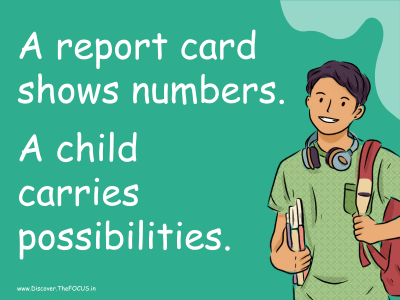
Marks Explain Performance, Not Potential
Every exam measures how a child performed on that day.
It does not measure who the child can become.

Marks are useful.
But they are often misunderstood — and sometimes misused.

When marks become labels, children start believing the label.

The Silent Damage of Over-Interpreting Marks

A child who scores low is often told:
• “You didn’t try hard enough”
• “You are not serious”
• “You are weak in studies”
But what if the truth is different?

What if the child:
• Learns differently
• Thinks visually, not verbally
• Freezes under pressure
• Needs more time to process
• Has strengths exams don’t measure
Marks cannot capture these realities. 

What Marks Actually Measure

Marks usually measure:
• Memory
• Speed
• Exam temperament
• Familiarity with the question pattern
• Coaching exposure

They do not measure:
• Curiosity
• Creativity
• Emotional intelligence
• Leadership
• Practical intelligence
• Long-term growth potential
Yet we often treat marks as a final verdict.

What Happens Inside the Child

When marks are treated as identity:
• Confidence reduces
• Fear increases
• Comparison becomes constant
• Motivation turns external
• Learning becomes mechanical

The child stops asking:
“What am I good at?”
And starts asking:
“What is wrong with me?”
This shift is dangerous — and usually invisible. 

A Question for Parents (Pause Moment)

If exams disappeared tomorrow,
would I still understand my child?

Most parents realise here:
They know the marks, not the mind.

A Healthier Way to Look at Marks

Marks are:
• Feedback, not judgement
• Data, not destiny
• One signal, not the whole story

When parents treat marks this way:
• Conversations become safer
• Children open up
• Strengths surface naturally

Growth begins here.


When marks lose their grip, comparison usually enters the picture.